

Look for a small amount of marbling and a small amount of fat over the outside of the meat. The color should be grayish-pink and the meat, firm.
Fresh pork comes from one of four primal cuts: shoulder, loin, side and leg.
Red meat classification: Although commonly referred to as "the other white meat" due to the fact that it becomes a paler or lighter color when cooked, pork is actually part of the red meat category. Myoglobin, a protein in meat that holds the oxygen that is transferred to muscles via red blood cells determines the color of the meat. Pork has more myoglobin than chicken so is therefore considered a red meat along with other livestock (veal, lamb and beef).
What to look for and amount to buy:
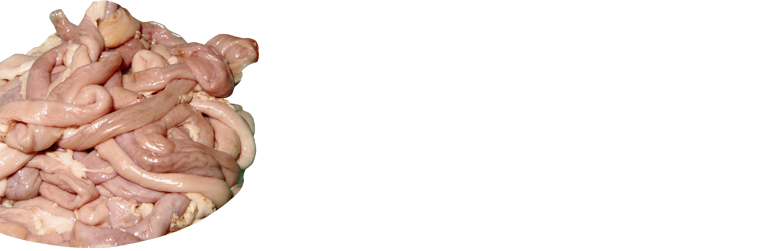
Available from a butcher or the meat department of the supermarket, pork chitterlings are generally inexpensive. Choose securely wrapped packages and be sure to check the expiration date on the package. They are available fresh and frozen, pre-cleaned and not pre-cleaned. The pre-cleaned chitterlings are about twice the price.
Allow 3- to 4-ounces chitterlings per person as a serving. Chitterlings absorb water as they cook and they shrink. The yield will be a little over half the amount you started with.
Storage:
Fresh pork chitterlings should be cooked or frozen within a day of purchase. If you decide to freeze, check with the butcher to be sure it was not previously frozen. To freeze, place the pork offal in airtight foil or freezer bags and store in freezer (0°F or colder) for up to 3 months.